Advancing AI-enabled research on emerging infectious diseases
February 24, 2026

A strategic research post funded by The Pandemic Institute is helping scientists deepen their understanding of some of the world’s most dangerous viruses while strengthening the UK’s preparedness for future pandemics. The post, held by Dr Tessa Prince, focuses on combining artificial intelligence and advanced microscopy to create new ways of studying high-risk viruses.
Tessa’s work centres on Middle East respiratory syndrome (MERS), a viral respiratory illness caused by Middle East Respiratory Syndrome Coronavirus (MERS-CoV). First identified in Saudi Arabia in 2012, MERS-CoV is a zoonotic virus transmitted from animals to people, most commonly from camels. MERS-CoV is classified as a high consequence infectious disease due to its high fatality rate of around 36%, its capacity to cause severe disease and the lack of widely available treatments or vaccines. Yet despite its severity, relatively little is known about how the virus behaves inside the body. As a result, research must take place in specialist facilities known as containment level 3 (CL3) laboratories, which are designed with enhanced safety features and protocols.
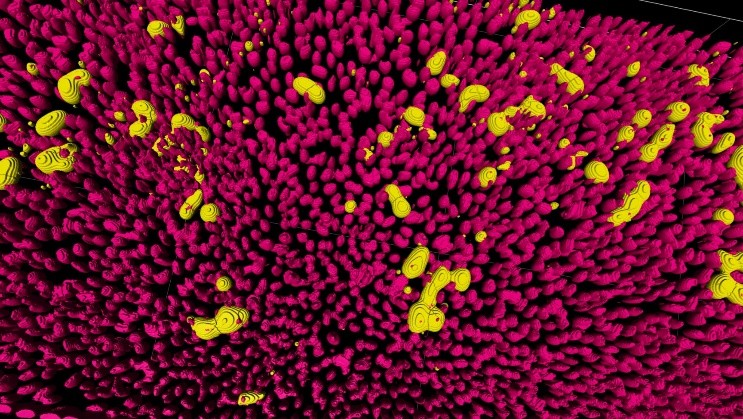
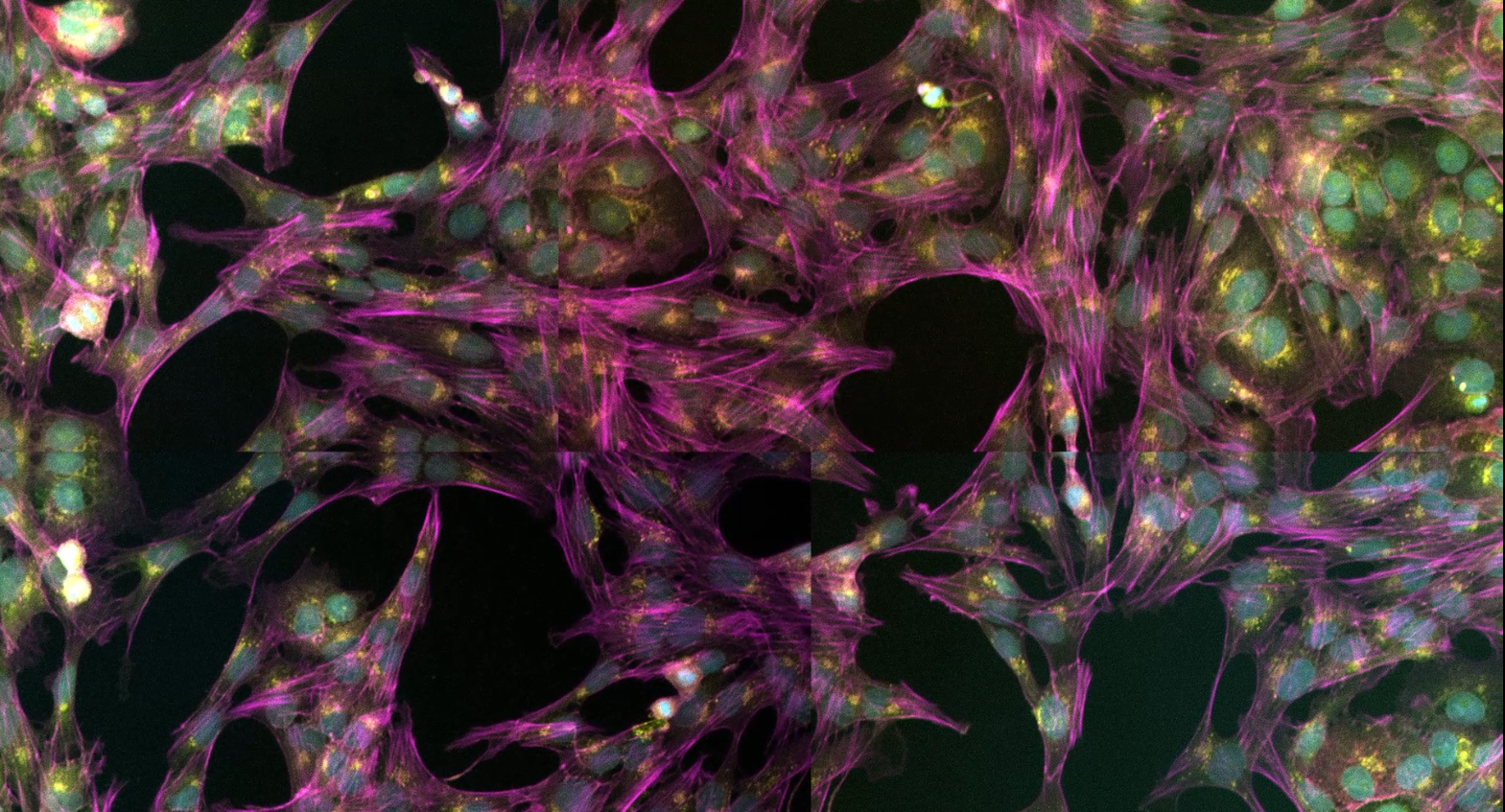
At the heart of the project is a powerful microscope installed inside the CL3 laboratory: the Zeiss Cell Discoverer 7. This fully automated imaging system allows researchers to observe viruses infecting living cells in extraordinary detail. It captures high-resolution 2D and 3D images over time, revealing how infection spreads and how cells respond. Tessa is using AI to make this process faster and more precise. Machine-learning models are used to identify infected cells, enabling the system to first scan samples at low resolution, automatically detect areas of interest, and then zoom in to collect detailed images. You can watch a video of this in action here.
“Viruses like MERS have to be studied in high-containment laboratories, which naturally makes the work slower and more complex,” said Dr Tessa Prince. “That can delay how quickly we build a full picture of how these viruses behave. By combining artificial intelligence with advanced imaging in these secure labs, we can work more efficiently and improve our understanding while maintaining the highest safety standards”
By combining AI, automation and high-containment science, the project is not only advancing knowledge of a deadly virus but also building a new research capability designed to help scientists respond more quickly and effectively to the next pandemic threat.
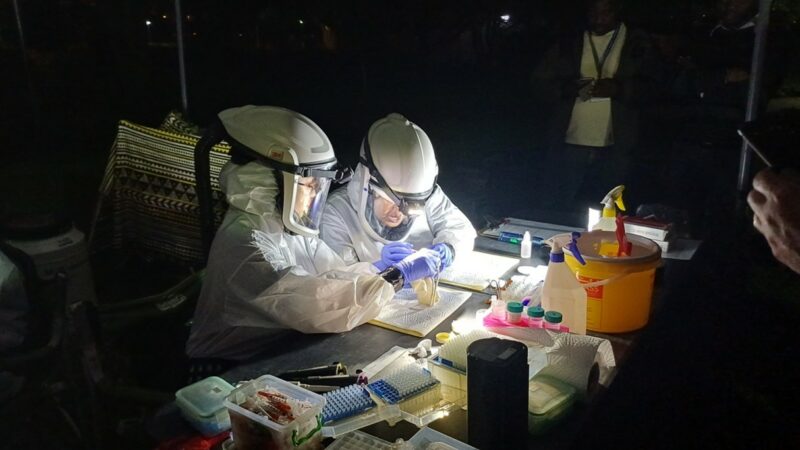
Dr Tessa Prince, one of The Pandemic Institute’s (TPI) funded strategic posts and member of our Internal Scientific Advisory Panel, reflects on her recent participation in a UK–South Africa workshop focused on preventing zoonotic spillover of pandemic-prone respiratory viruses. I was recently invited to attend the SAMRC–UKRI workshop on a “One Health approach to the…
A strategic research post funded by The Pandemic Institute is helping scientists deepen their understanding of some of the world’s most dangerous viruses while strengthening the UK’s preparedness for future pandemics. The post, held by Dr Tessa Prince, focuses on combining artificial intelligence and advanced microscopy to create new ways of studying high-risk viruses. Tessa’s…
Join our mailing list to hear about our latest news, events and funding opportunities.