
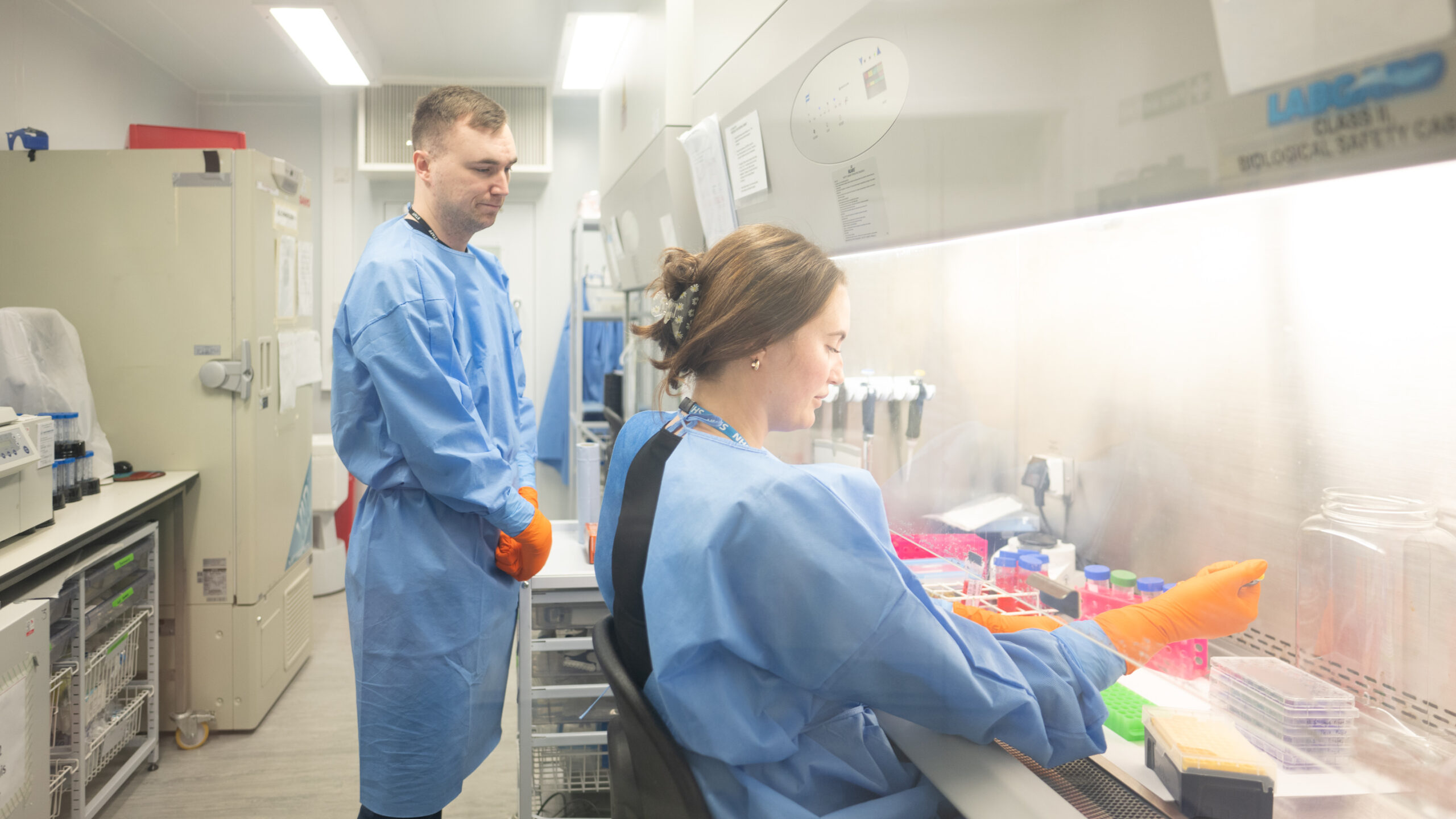
As part of The Pandemic Institute Dstl HPRU PhD cohort, we are pleased to announce three funded PhD opportunities focused on combating next-generation biological threats. Together, these initiatives accelerate the testing of medical countermeasures and build sustained antiviral resilience. Located in Liverpool – a foremost hub for rapid outbreak evaluation, biosecurity and global health protection – these studentships offer access to a prestigious and well-established network of expertise.
Part-funded by the National Institute for Health and Care Research (NIHR) Health Protection Research Unit (HPRU) in Emerging and Zoonotic Infections (EZI), these PhD studentships are part of an Integrated Health Security Cohort. Building on The Pandemic Institute’s strategic partnerships with UK Health Security Agency, NIHR HPRU EZI and Defence Science and Technology Laboratory, we are developing a new generation of interdisciplinary researchers to address emerging infectious disease threats and strengthen national health protection and biosecurity capabilities.

Application deadline: 5pm BST, 31 July 2026.
How to apply: Email your CV, cover letter and project title to [email protected].
Due to constraints surrounding the funding and stakeholders we can only offer this opportunity to Home/UK students. To qualify as a UK student, you generally must have settled status, indefinite leave to remain, or be a British citizen who has lived in the UK for at least three consecutive years prior to the course start date.
For more information and specific application details, please visit the individual PhD pages:
Project 1: Development of a T cell diagnostic test for viral haemorrhagic fever (VHF) exposure
Led by the University of Liverpool
- The Goal: Develop a diagnostic assay to detect VHF exposure
- The Impact: Transforming rapid surveillance and health-protection responses.
Project 2: Programming innate immune responses to emerging pathogens for sustained viral resilience
Led by the University of Liverpool
- The Goal: Develop a human-relevant platform to predict and reprogram innate immune responses
- The Impact: Promote sustained antiviral resilience and improved outbreak preparedness
Project 3: Automated human lung organoids for translational infectious disease research
Led by the Liverpool School of Tropical Medicine
- The Goal: Providing rapid, human-relevant approaches for evaluating respiratory pathogens and interventions
- The Impact: Accelerating the testing of medical countermeasures without animal models.