Public Steering Group meet to discuss vaccine research
April 22, 2026

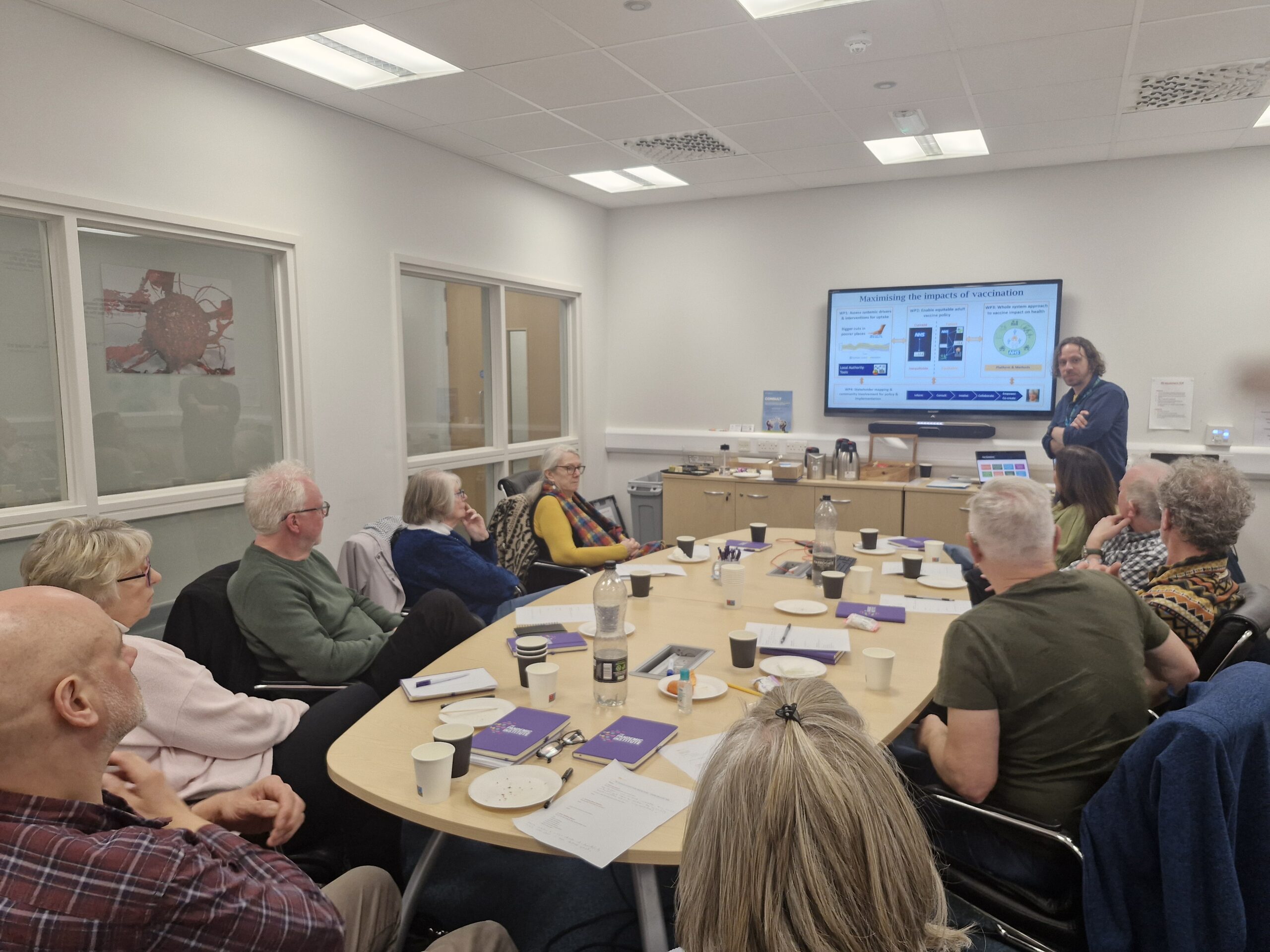
The Pandemic Institute Public Steering Group recently met for its fifth session, bringing together community members and researchers to review ongoing work and discuss a new study focused on vaccine inequalities.
The meeting opened with updates from the Institute, including progress on two research projects: an AI-assisted robotic microscope being used in a high-containment laboratory to identify changes in MERS-infected cells, and a Europe-wide bird flu risk-mapping study using data on wild bird populations and behaviour. These projects aim to improve early detection and response to emerging infectious diseases.
The focus of the session was a presentation by public health researcher Dr Dan Hungerford, who outlined a proposed study on how vaccine programmes could be made more equitable. Dan began by describing longstanding inequalities in childhood vaccination, including that uptake of the measles, mumps and rubella (MMR) vaccine remains lower in more deprived communities, with the gap widening since the COVID-19 pandemic. He noted that a measles outbreak in 2012 cost millions of pounds to control, far more than prevention through vaccination would have cost, and disproportionately affected disadvantaged groups.
The presentation then moved to adult vaccination policy, where eligibility is often determined by age or diagnosed health conditions. Dan highlighted how this can exclude those most at risk. In areas with lower life expectancy, some individuals may never reach the age threshold required to qualify for certain vaccines. Similarly, eligibility based on underlying health conditions depends on access to healthcare and diagnosis, which can be more limited in deprived communities. Research paper here: Eligibility Without Equity: Rethinking Age-Based Adult Vaccine Policies | medRxiv
To address this, the proposed research would explore a more risk-based area level approach to vaccine eligibility. Statistical modelling would be used to assess whether such an approach could improve both health outcomes and cost-effectiveness compared to existing systems.
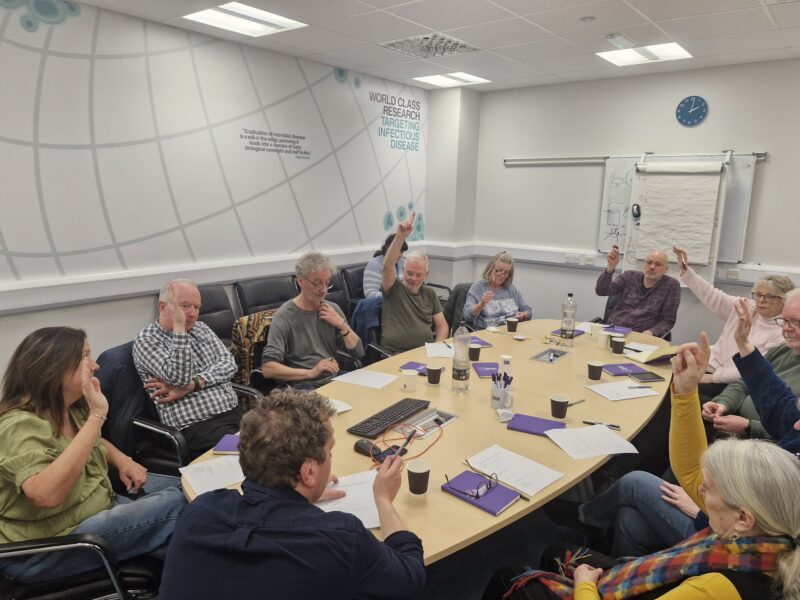
Following the presentation, members of the Public Steering Group discussed the proposals, focusing on both opportunities and challenges. The importance of trusted, community-led communication was emphasised, and members also reflected on practical constraints within the healthcare system. Incentives and staffing were highlighted as key factors influencing delivery.
Overall, the discussion reflected support for the proposed research. Members welcomed the focus on fairness and the use of more detailed data to inform policy, while recognising the added complexity this would bring.
These meetings are run in collaboration with Glenn Skelhorn from The Thinker Hub CIC, a community organisation that facilitates open discussions around “big” ethical and social questions. The sessions are designed not only to gather opinions but also to empower participants – helping members develop critical thinking and discussion skills while gaining insight into how research is designed, funded, and carried out.
Passing the 100-day milestone since the WHO declared the Andes hantavirus outbreak, global health teams are evaluating the speed of the containment effort. The emergency serves as a vital test case for the G7-backed 100 Days Mission, which aims to reduce the impact of future pandemics by making diagnostics, therapeutics and vaccines available within 100…

New research has identified key mutations in the Middle East respiratory syndrome coronavirus (MERS-CoV) that may influence how easily the virus infects cells and evades immune responses, offering important insights for pandemic preparedness. The study, supported by funding from The Pandemic Institute and led by researchers at the University of Liverpool plus colleagues from across…
Join our mailing list to hear about our latest news, events and funding opportunities.